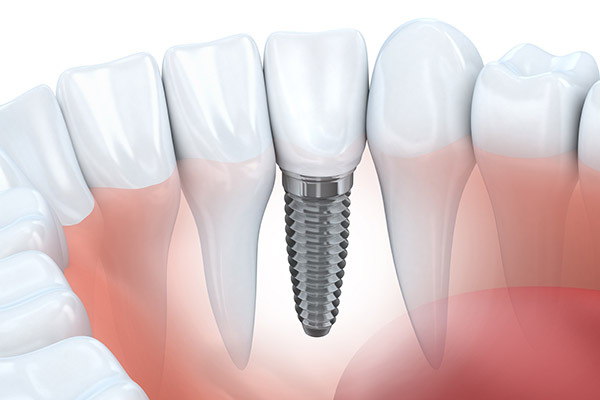
 Dental implants consist of rods or screws that are inserted into a person’s jawbone to replace missing teeth roots that come out when teeth are lost. An implant serves as a base for a restoration like a crown, which replaces the tooth’s visible part.
Placing implants in a person’s mouth requires minor oral surgery. Periodontists often perform the procedure because they have additional education on gum tissue issues. They are qualified to perform dental surgical procedures like the installation of implants.
Reasons that a periodontist might recommend dental implants
Let us look at a few of the reasons that a periodontist might recommend replacing lost teeth with implants.
1. To restore the function and appearance of missing teeth
Implants are hidden underneath a patient’s gum tissues, and the restorations that go over them are designed to look just like natural teeth. The restoration is also almost as stable as a real tooth because the implant fuses with bone tissues around it via osseointegration. It can take up to six months to complete the process of replacing missing teeth with implants.
2. To preserve the patient’s jawbone
Implants are the only missing teeth replacement options that prevent the jawbone deterioration that occurs when teeth fall out. Like muscle tissues, bone tissues need to be regularly stimulated to keep them healthy and strong. Parts of the jawbone stop getting this stimulation when teeth fall out, leading to tissue loss. Bone tissue loss typically leads to changes in a person’s facial structures and the formation of wrinkles and fine lines. If a patient has already lost considerable amounts of bone tissue in their jaw, bone grafts can be used to restore it.
3. To keep your remaining teeth properly aligned
Teeth often move out of their proper alignment when there is a space in between the teeth. This is the body’s way of trying to close the gap. Poorly aligned teeth can affect the appearance of the smile, and it makes it more challenging to keep teeth clean, increasing the risk of tooth decay and gum disease. Implants close the space left behind by missing teeth, preventing the remaining natural teeth from becoming misaligned.
A periodontist is the right person for the job
Periodontists have additional education focused on diagnosing and treating jaw issues and performing oral surgery. Gum disease is the leading cause of adult tooth loss, and many people with missing teeth already see a periodontist for this condition. The periodontist’s familiarity with the patient’s dental health issues and additional training makes them the best candidate for the job. They are also qualified to handle any complications that develop due to the placement of dental implants.
Replace missing teeth with implants
Our periodontist has years of experience placing dental implants. Call or drop by our Berkeley Heights clinic to learn more about implants and other missing teeth replacement options.
Request an appointment or call Berkeley Periodontics and Dental Implants at 908-491-3201 for an appointment in our Berkeley Heights office.
Related Posts
A periodontist is a dental health professional specializing in treating gum disease. Their area of specialty is the tissues surrounding the teeth, meaning patients can visit them for procedures like soft tissue sculpting and grafting, and bone grafts.Conditions affecting the gums or the jawbone may sometimes cause no pain or discomfort. According to the American…
A periodontist may recommend a gum grafting treatment to patients whose oral health or appearance is affected by gum recession. Periodontists, or dentists who specialize in gum tissues, perform gum grafting operations regularly.Various factors can cause gum recession, including bacteria that cause gingivitis and recession, genetically thin tissue, orthodontic treatment, aggressive tooth brushing, smoking, tobacco…
Gingivectomy is one of the most popular treatment methods for periodontal disease. There are only a handful of treatment methods that can reverse the effects of periodontal disease. This procedure is one of them. It can bring the smile back to your face, making you more confident than ever before. Anyone facing the possibility of…